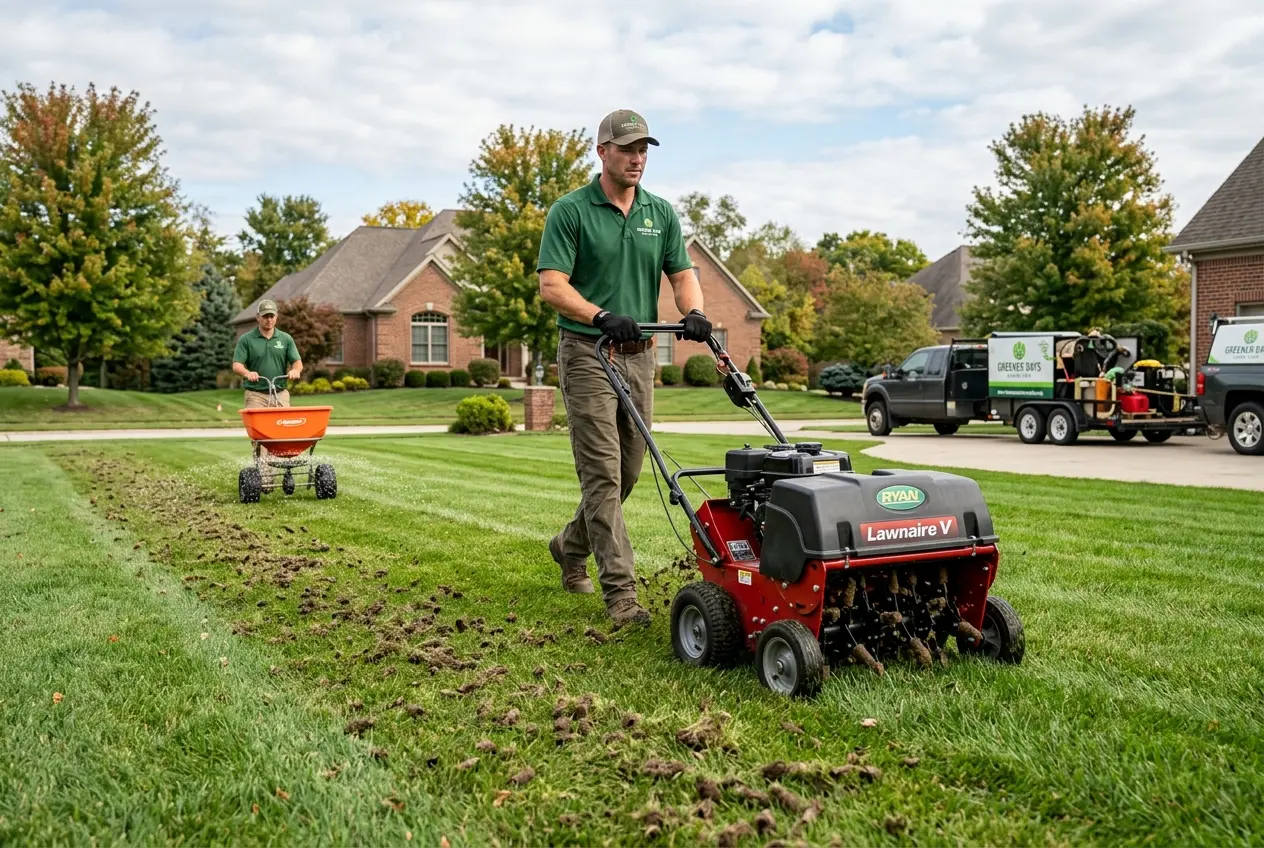
Raleigh's heavy clay soil becomes compacted over time, especially in high-traffic areas and newer construction sites where topsoil has been disturbed. Our core aeration service removes small plugs of soil to allow air, water, and nutrients to penetrate deeper. We time this service for early fall when soil temperatures are ideal for recovery.
Following aeration, we overseed with blends specifically selected for our region - typically tall fescue mixes that withstand summer heat while staying green in mild winters. For shady lawns common in established neighborhoods like ITB, we incorporate fine fescues. The aeration holes provide perfect seed-to-soil contact, dramatically improving germination rates compared to surface seeding. We include starter fertilizer to give new grass the best start.
Following aeration, we overseed with blends specifically selected for our region - typically tall fescue mixes that withstand summer heat while staying green in mild winters. For shady lawns common in established neighborhoods like ITB, we incorporate fine fescues. The aeration holes provide perfect seed-to-soil contact, dramatically improving germination rates compared to surface seeding. We include starter fertilizer to give new grass the best start.
Our Process
- 01 Step 1: Soil moisture assessment to ensure ideal aeration conditions
- 02 Step 2: Double-pass core aeration with professional equipment
- 03 Step 3: Application of regionally-appropriate seed blend
- 04 Step 4: Starter fertilizer application and watering recommendations
Benefits
- Reduces soil compaction from foot traffic and clay content
- Improves drought resistance by enhancing root growth
- Thickens turf to crowd out weeds
- Revitalizes tired lawns without complete renovation
Frequently Asked Questions
When is the best time for aeration in Raleigh?
Early fall (September-October) allows grass to recover before winter while avoiding summer stress. Spring aeration can be done but is less effective here.
Will aeration make a mess?
The small soil plugs break down within 1-2 weeks. We can arrange to remove them for customers who prefer, though leaving them returns organic matter to the soil.
How soon can I mow after overseeding?
Wait until new grass reaches 3 inches, typically 3-4 weeks. We'll provide specific guidance based on growth rates.